
MT-404 DRONES & AVIATION
MT-404 is a multilayer RF/EMF attenuation technology evaluated for unmanned aerial systems (drones/UAS) and broader aviation platforms.
This technical briefing explains the practical question of interior versus exterior application and summarizes the operational benefits the technology can provide.
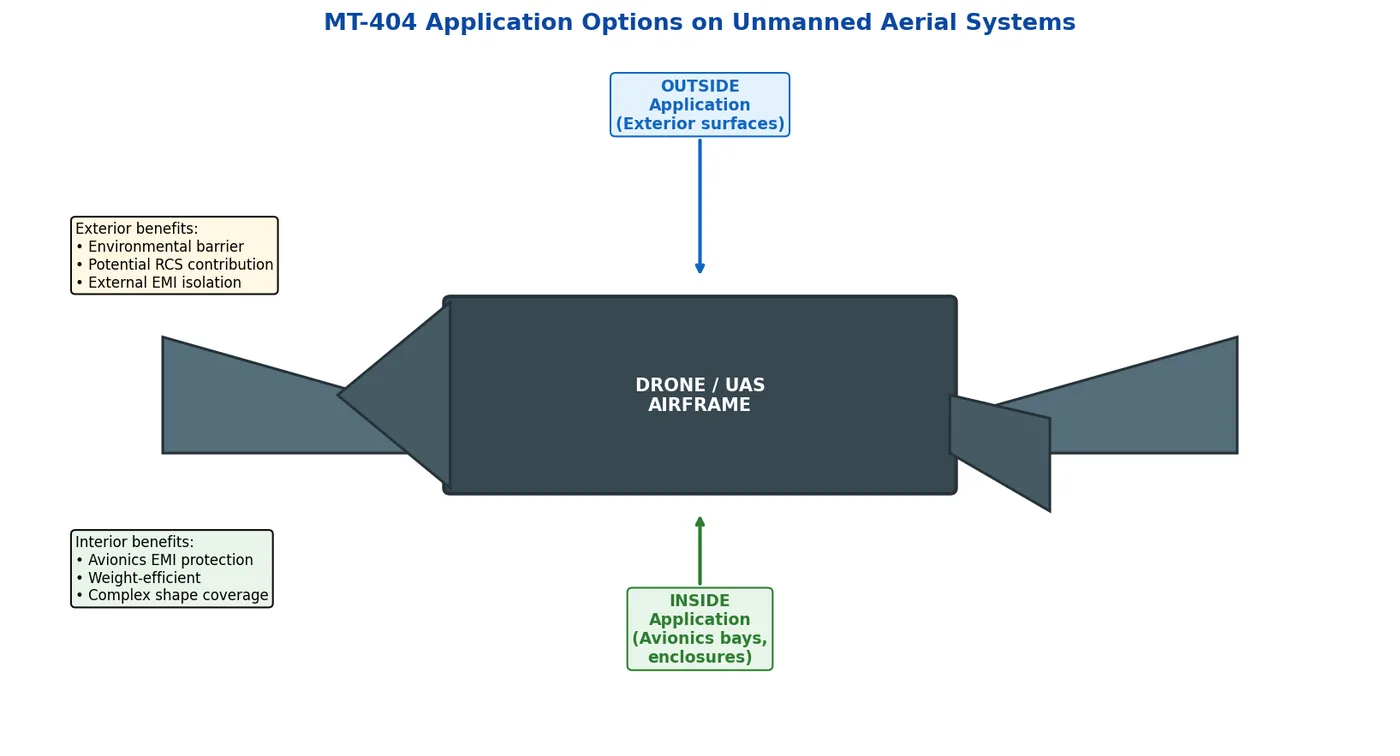
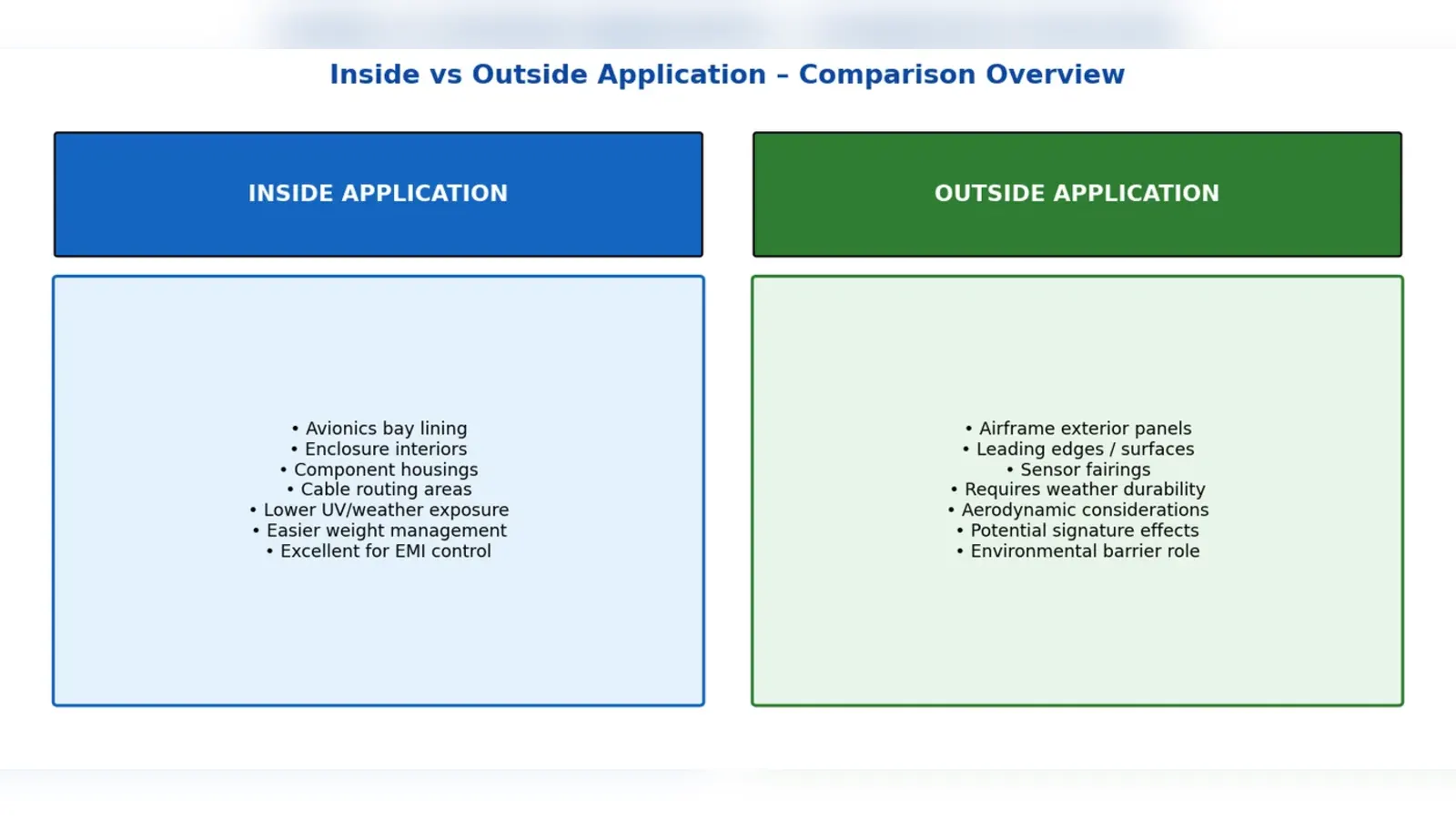
CAN MT-404 BE APPLIED INSIDE OR OUTSIDE A DRONE?
Yes - both interior and exterior applications are feasible, each offering distinct advantages and design considerations. The flexible multilayer nature of MT-404 allows it to be adapted to either location or used in combination.
-
Interior application (recommended for most avionics protection):
Lining of avionics bays, equipment enclosures and component housings, with reduced exposure to UV, rain, abrasion and aerodynamic loads, excellent control of internal electromagnetic interference (EMI) and crosstalk, easier weight and thickness management, and minimal impact on external aerodynamics. -
Exterior application (selected surface and barrier roles):
Coating of selected airframe panels, fairings or sensor housings. Provides an environmental and corrosion-support barrier in addition to RF attenuation, and may contribute to electromagnetic signature management (subject to design and testing).
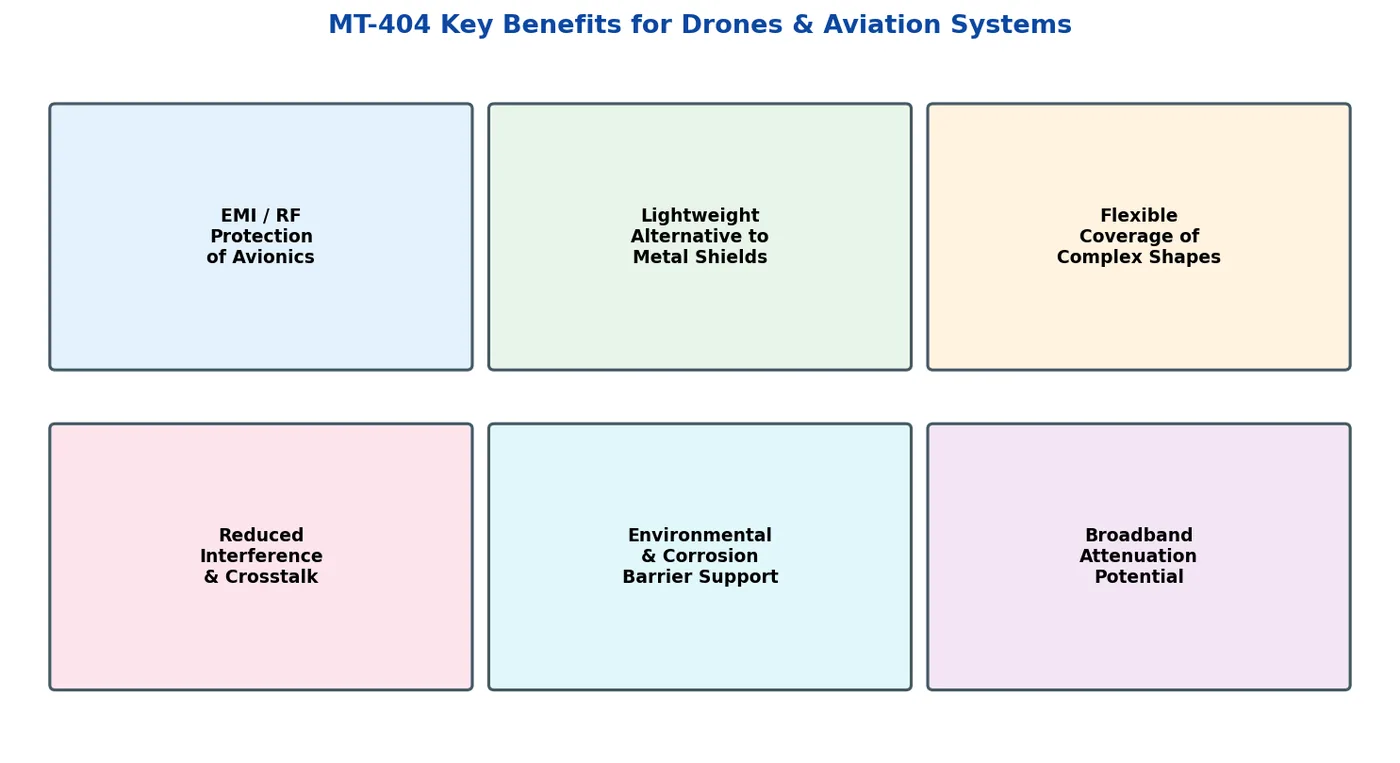
CORE BENEFITS FOR DRONES AND AVIATION
-
Protection of Avionics and Sensors:
Helps attenuate unwanted RF energy around radios, flight controllers, GPS/GNSS receivers, cameras and data links, improving signal integrity and reducing interference-related anomalies. -
Lightweight Alternative to Metal Shielding:
The polymer-based multilayer structure offers a lower-density option that can be applied as a coating or laminated film, supporting weight-critical UAV designs. -
Coverage of Complex Geometries:
Spray or laminate application conforms to irregular surfaces, internal structures and tight spaces that are challenging for rigid metal solutions. -
Broadband Attenuation Potential:
The multilayer design targets a wide frequency range relevant to common aviation and UAS communication, navigation and radar bands. -
Environmental and Durability Support:
When applied externally or as a barrier layer, the coating can contribute to moisture, chemical and corrosion resistance of underlying structures.
PRACTICAL DESIGN CONSIDERATIONS
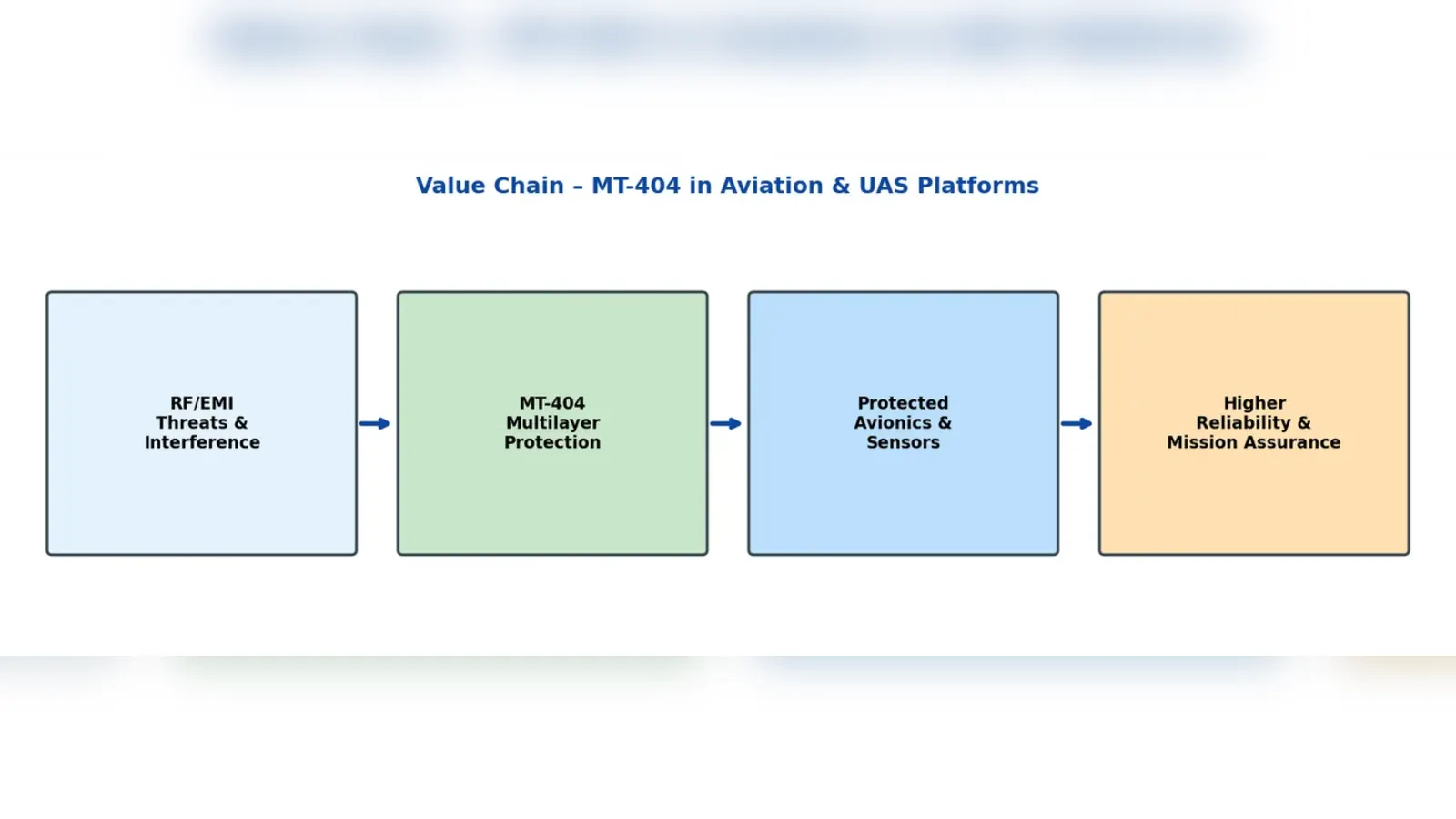
RF/EMI threats are mitigated by MT-404, resulting in better-protected systems and improved mission reliability.
-
Weight & Thickness:
Optimize dry-film thickness for the required attenuation while respecting UAV mass budgets. -
Antenna Transparency:
Keep RF apertures (GPS, telemetry, video antennas) clear of the coating or use designed RF windows. -
Adhesion & Environmental Qualification:
Exterior applications require validation under vibration, temperature cycling, humidity and UV exposure. -
Integration with Composites:
Compatible with many polymer and composite substrates common in modern UAS. -
Testing:
Final RF performance, adhesion and environmental durability must be verified on representative hardware.
SUMMARY RECOMMENDATION
MT-404 can be used effectively both inside and outside drone and aviation structures. Interior application is generally preferred for primary avionics EMI protection because it minimizes aerodynamic and environmental challenges while delivering strong attenuation of internal and external RF energy.
In both cases the technology offers a lightweight, conformable, multilayer solution that supports higher electromagnetic compatibility, improved system reliability and design flexibility for modern unmanned and manned aviation platforms.
Disclaimer: This briefing is for technical evaluation purposes. All performance statements are based on the design principles of the MT-404 multilayer technology. Actual attenuation levels, weight impact and environmental durability must be confirmed through testing on the specific platform and application. Antenna and RF-aperture design must be coordinated to avoid unintended signal blockage.
Contact
Enquiry form
Tell us about your environment and our team will recommend the right coating.